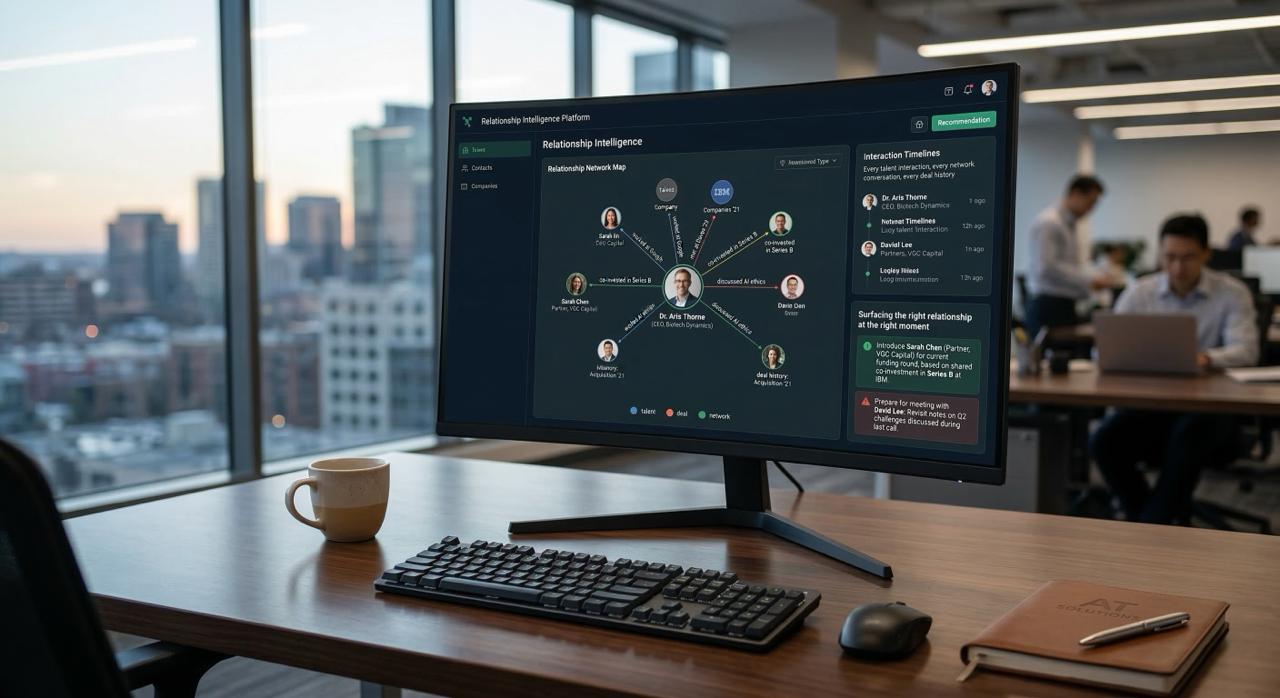
A Full AI Production Team — Not Another Chatbot
We audit, consult, build, and deploy custom autonomous AI systems that do the work — not just tell you how.
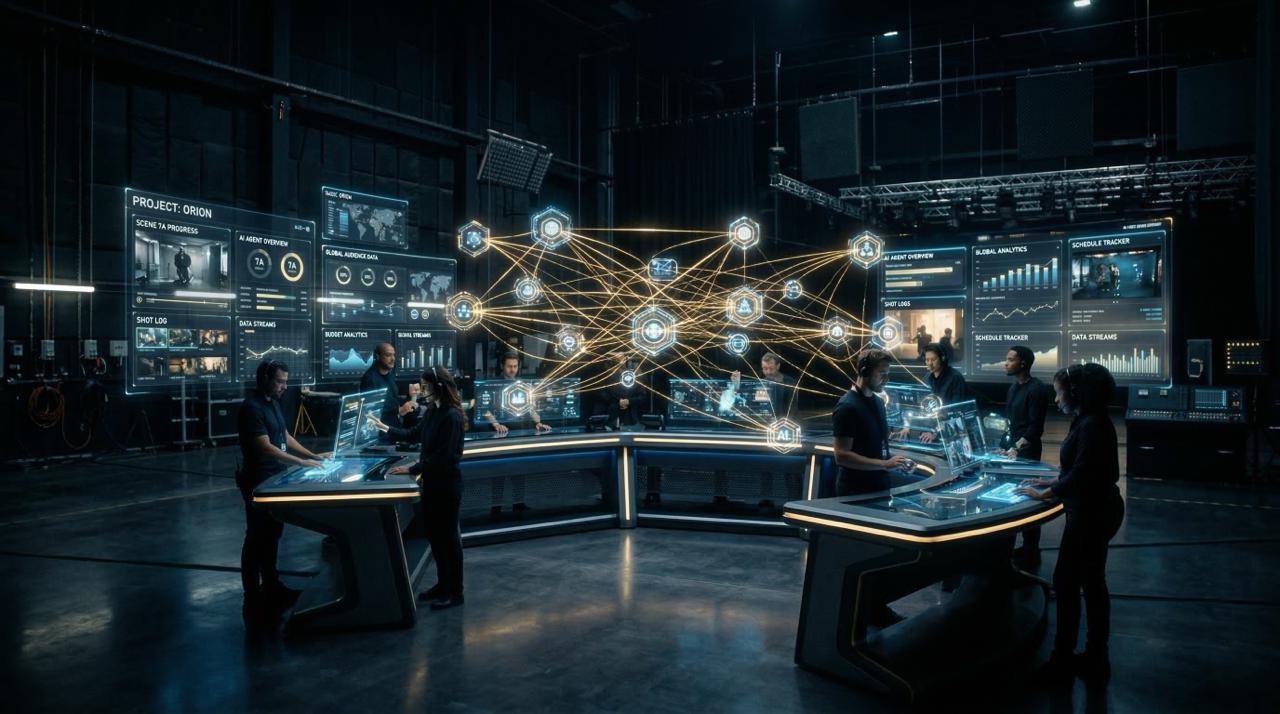
AI Agent Teams — Custom-Built, Running 24/7
Think of it like hiring a production department that works while you sleep. They don't take breaks, don't call in sick, and don't forget what you told them last season. While you're on set, at dinner, or in post — your AI team is screening submissions, coordinating schedules, prepping call sheets, and building reports so you walk in already ahead.
"You leave Friday with 200 unread submission emails and a packed Monday. By Monday 7 AM: every submission screened, top 15 ranked by fit, research compiled on each creator, and personalized responses drafted — queued for your one-click approval. Your competitor's development team hasn't even opened their inbox."
Talk to It Like a Human — Any Channel, Any Format
Text it. Send a voice memo. Slack it. Email it. Forward something and say "handle this." Communicate the way that's natural for you — from rescheduling a shoot to building a custom tool to onboarding new crew. It can do anything on a computer that a human can — browse the web, log into platforms, manage files, send emails, pull data.
"You text one message: 'We hired Sarah for the new series starting Monday.' The system creates her email, sets up production software access, adds her to the correct call sheets, and sends a welcome packet with the crew handbook. Zero human clicks required."

Multi-Agent Ecosystems — Not One Bot, A Full Team
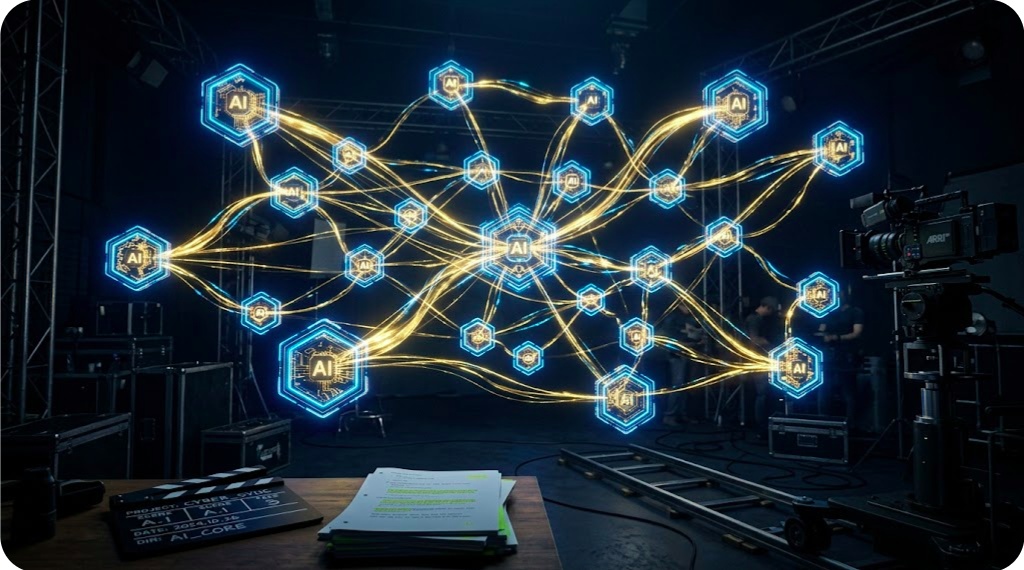
This isn't one chatbot answering questions only when asked. It's a team of AI workers exclusively for your company — one manages, one researches, one builds, one coordinates talent — they talk to each other, hand work off, and check each other's quality before anything reaches you. Like hiring a small department that runs 24/7 at a fraction of one salary.
"A coordinator agent receives a production brief, assigns market research to one agent and the pitch deck to another — simultaneously. The researcher delivers audience data, the builder creates the deck, and the coordinator reviews both before anything reaches the executive producer."
Autonomous Build Partner — Tools in Minutes, Not Months
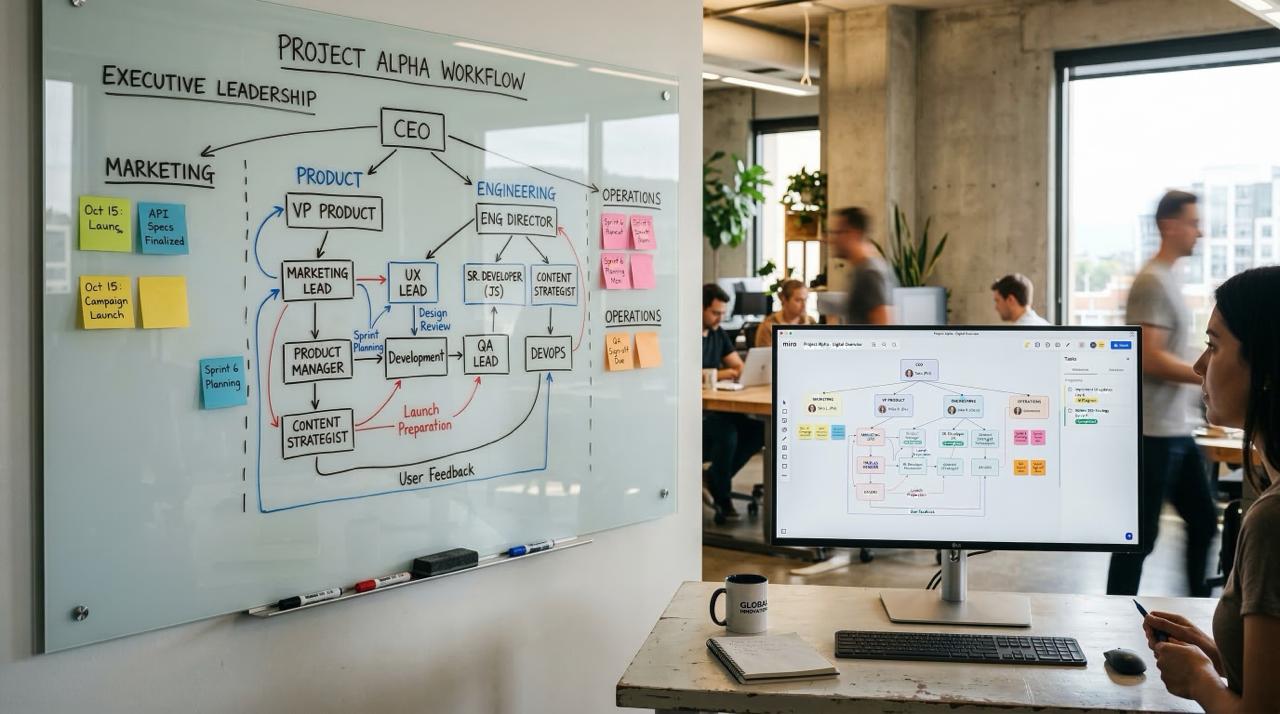
Describe what you need in plain English. In a fraction of the time it would take a development team — minutes to hours instead of weeks — you have a real, working, branded tool. Production trackers, content dashboards, internal databases, scheduling tools, and dedicated websites for each project — complete with branding, crew portals, and stakeholder access. No developer. No agency. You talk, it builds.
"'I need a dashboard tracking all our shows across development, pre-production, production, and post.' A fully interactive board with drag-and-drop, status filters, and team views was built and live within 20 minutes."

Autonomous Communications — In Your Voice
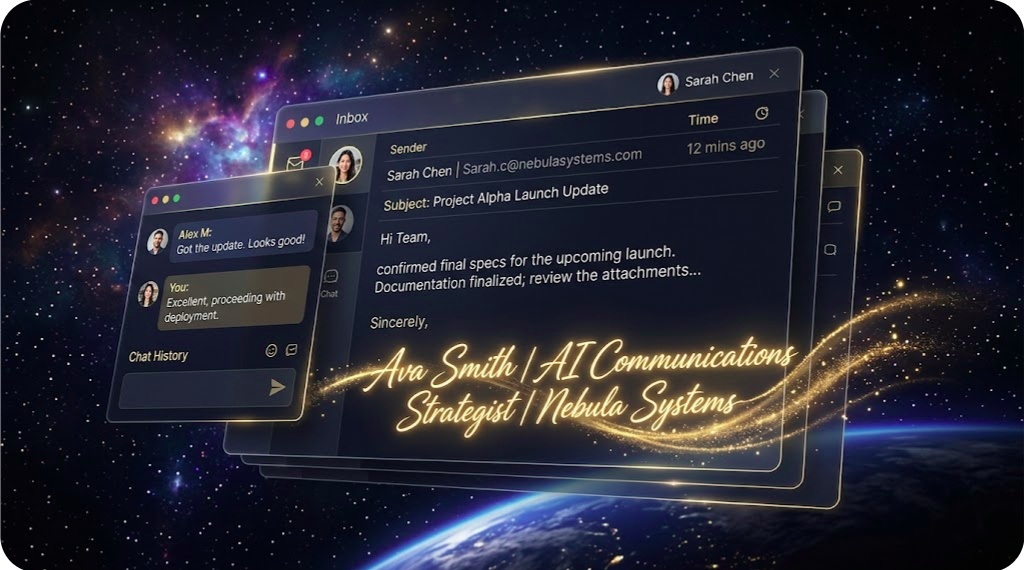
Press releases, talent outreach, client proposals, social content, pitch decks, one-pagers — all created automatically in YOUR voice, with YOUR branding, using real data. The kind of output that normally requires a marketing team of five, running on autopilot. Because it knows your company deeply, nothing it writes sounds like AI — it sounds like you.
"You wake up to 47 unread emails, three client texts, and a proposal due by noon. By coffee time: every email drafted in your voice, texts staged for review, and the full proposal assembled — drawing from your data, your relationships, your point of view. All that's left is your approval."
Persistent Memory — Gets Smarter Every Day
ChatGPT forgets everything between sessions. This is fundamentally different. Every conversation, decision, preference, relationship, and document is retained permanently — across any AI model, any tool. The longer it works with you, the smarter it gets about YOU and YOUR COMPANY specifically. Like a chief of staff who's been with you 30 years and remembers every detail you've forgotten.
"Three weeks after a passing comment about a casting preference, the system flags a conflict with a new talent submission — because it remembered. No reminder needed. It just knew."

Autonomous Research & Competitive Intelligence
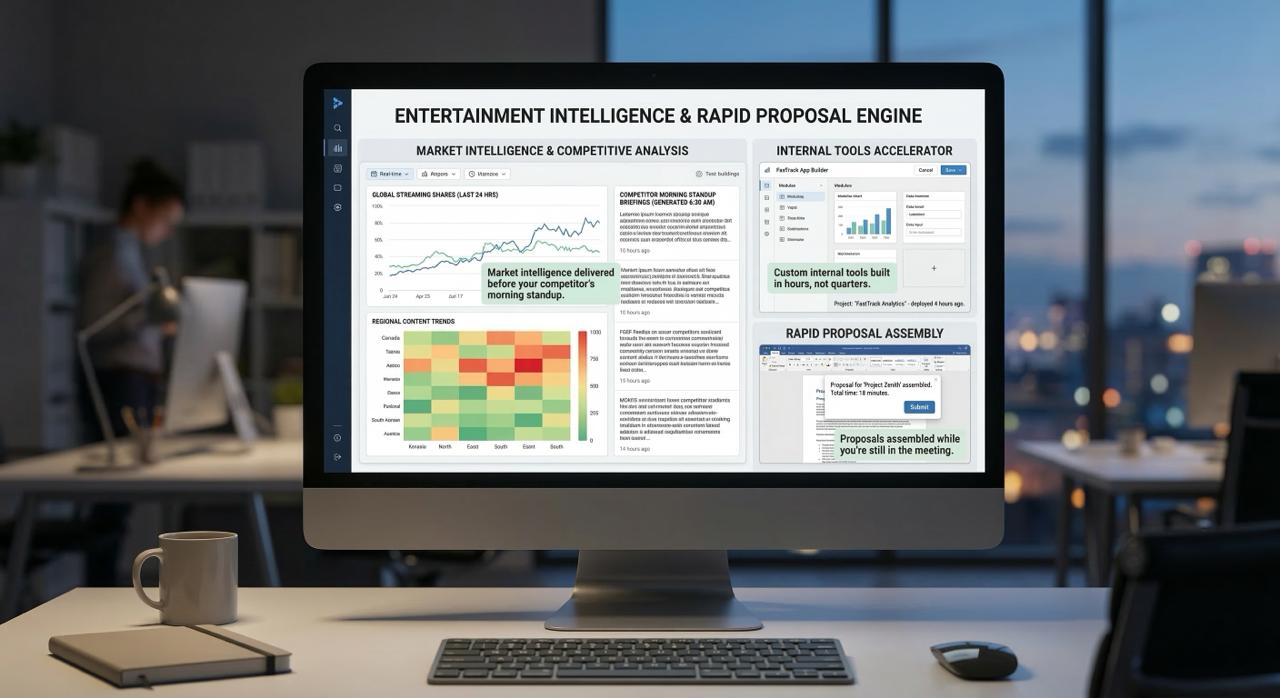
Every day it scans the entertainment landscape — what competitors launched, industry shifts, new regulations, emerging talent, partnership opportunities — and hands you a clean summary of what matters and what to do about it. Not raw links. Not noise. Actionable intelligence you can move on immediately. And it doesn't stop at the recommendation — it executes the action for you.
"A daily automated scan discovers a rival production company just lost their head of development to a competitor — intel in your inbox before coffee, along with a drafted outreach to their orphaned projects."
Autonomous Contract Review — Entertainment-Grade
Drop in a talent deal, distribution agreement, co-production treaty, or licensing contract — save hours of time and money by having contracts, clearances, proofread, and organized for your lawyers' review. It flags non-standard clauses, compares against industry benchmarks, identifies risk areas, checks for missing protections, and redlines in your favor. It knows entertainment deal structures — backend points, holdbacks, territory splits, MFNs, sunset clauses — not just generic legal boilerplate.
"A 47-page international co-production agreement lands at 4 PM. By 4:12 PM: every non-standard clause flagged, backend calculation errors identified, three missing IP protections highlighted, territory conflicts with your existing deals surfaced, and a full redline with recommended language — ready for your attorney to review in a fraction of the time. What used to take your legal team three days now takes twelve minutes."

AI Script Clearances & Risk Assessment — Two Layers of Protection
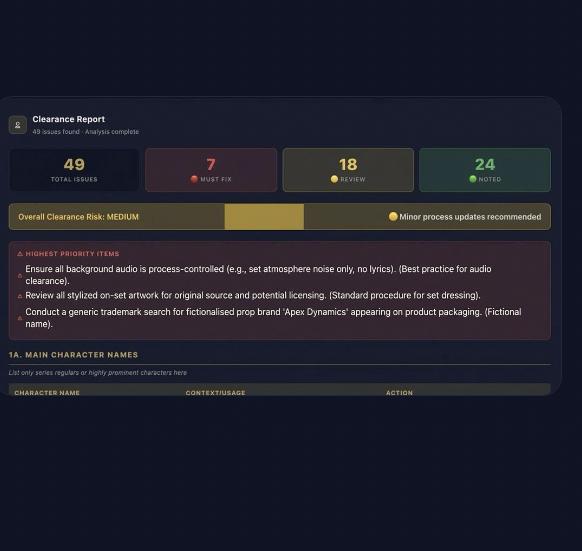
Upload a script and get a comprehensive clearance report before your legal team even opens it. The system analyzes every character name, location, brand reference, real-world event, and dialogue line — flagging potential defamation risks, trademark issues, right of publicity concerns, and life rights conflicts. It takes questions from your clearance department, legal, production, and any other team — via Slack, Telegram, email, or text.
What makes this different: two layers of review. The first layer identifies every potential risk and red flag. The second layer evaluates how realistic each risk actually is — assessing the likelihood of litigation, the probable outcome if someone did litigate, and whether the penalty would be low enough to be worth the creative choice. It constantly learns your company's custom risk aversion. CBS may not take the same risks that Hoodlum would — and the system adapts to YOUR threshold, not a generic legal standard.
"A limited series script references a real pharmaceutical company and a fictionalized version of their CEO. Layer 1 flags it as a high-risk defamation concern. Layer 2 analyzes: the real company is publicly traded with extensive public records, the fictionalized character is sufficiently transformed, similar cases (like 'The Big Short') faced no litigation, and even if challenged, damages would be minimal given the public figure doctrine. Verdict: Medium risk, likely defensible, worth the creative choice for your risk profile. Your attorney gets a 3-page memo instead of spending 12 billable hours reaching the same conclusion."
AI Script Coverage — Beyond the Logline
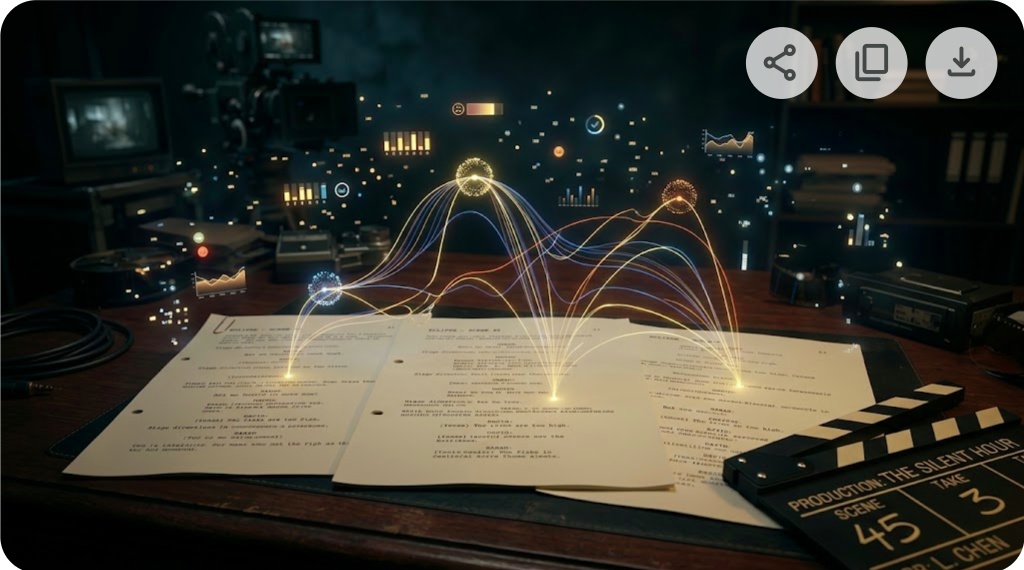
Upload a script and get studio-quality coverage in minutes — not a surface-level summary, but the kind of deep analysis a seasoned development executive would produce. Structure breakdown, character arcs, dialogue quality, tone consistency, market positioning, and a clear RECOMMEND / CONSIDER / PASS verdict with reasoning. But it goes further: it identifies comparable films with box office data, suggests realistic budget ranges based on scope, and recommends specific talent attachments — with strategic reasoning for why each name could unlock financing at different budget tiers.
"A writer submits a contained sci-fi thriller. In 8 minutes: full coverage with a CONSIDER (STRONG) rating. Comps identified — 'Ex Machina' ($15M budget, $37M WW gross), '10 Cloverfield Lane' ($15M, $110M WW), 'Coherence' ($50K, cult hit). Budget range: $8-18M suggested. Talent strategy: 'At $10M — attach a rising A-lister like [name] to unlock international pre-sales. At $18M — target [name] for domestic distribution leverage.' The development team walks into their Monday meeting already knowing exactly how to package it."
AI Rough Cut Analysis — Your Always-Available Editor's Eye
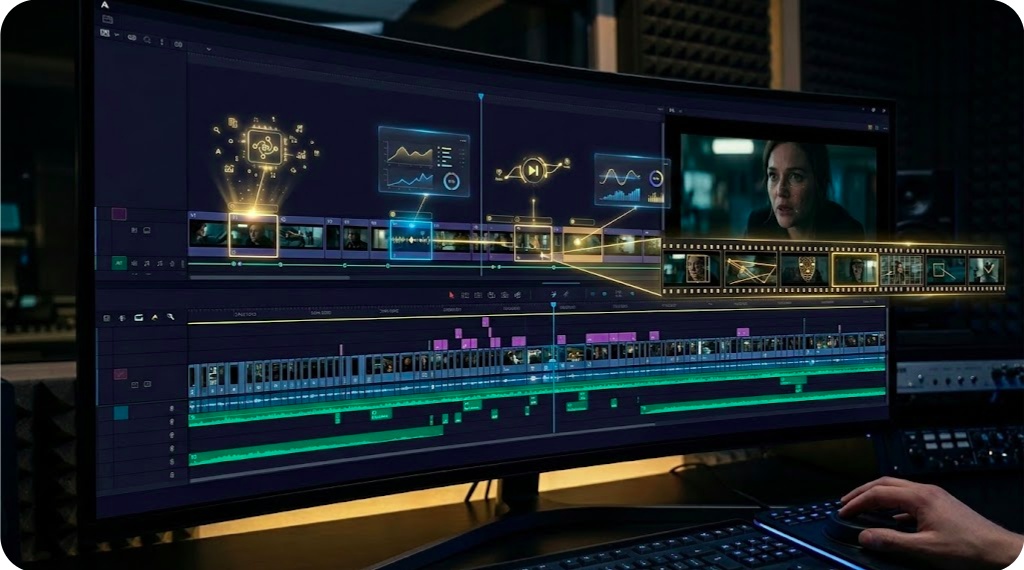
Upload a rough cut and get the kind of detailed edit notes that usually require a week of back-and-forth with your post team. Scene-by-scene pacing analysis with specific timecode references. Story structure evaluation — does the second act sag? Is the climax earning its payoff? Tonal consistency across the cut. Demographic reach assessment — will this play to the target audience? Where does it lose them? Plus music and sound design suggestions, with references to comparable films that nailed similar moments.
"You upload a 94-minute rough cut of a drama series pilot. Within 30 minutes: scene-by-scene notes identifying a pacing drop between 22:00-31:00 (suggests restructuring two scenes), flags that the cold open loses 18-34 demo engagement by minute 3 (recommends opening on the inciting incident instead), identifies the strongest emotional beat at 47:12 (suggests building the trailer around it), and notes that the ending mirrors 'Succession' S1E1's tonal approach — which tested at 92% with upscale audiences. Your editor gets a prioritized punch list instead of vague network notes."